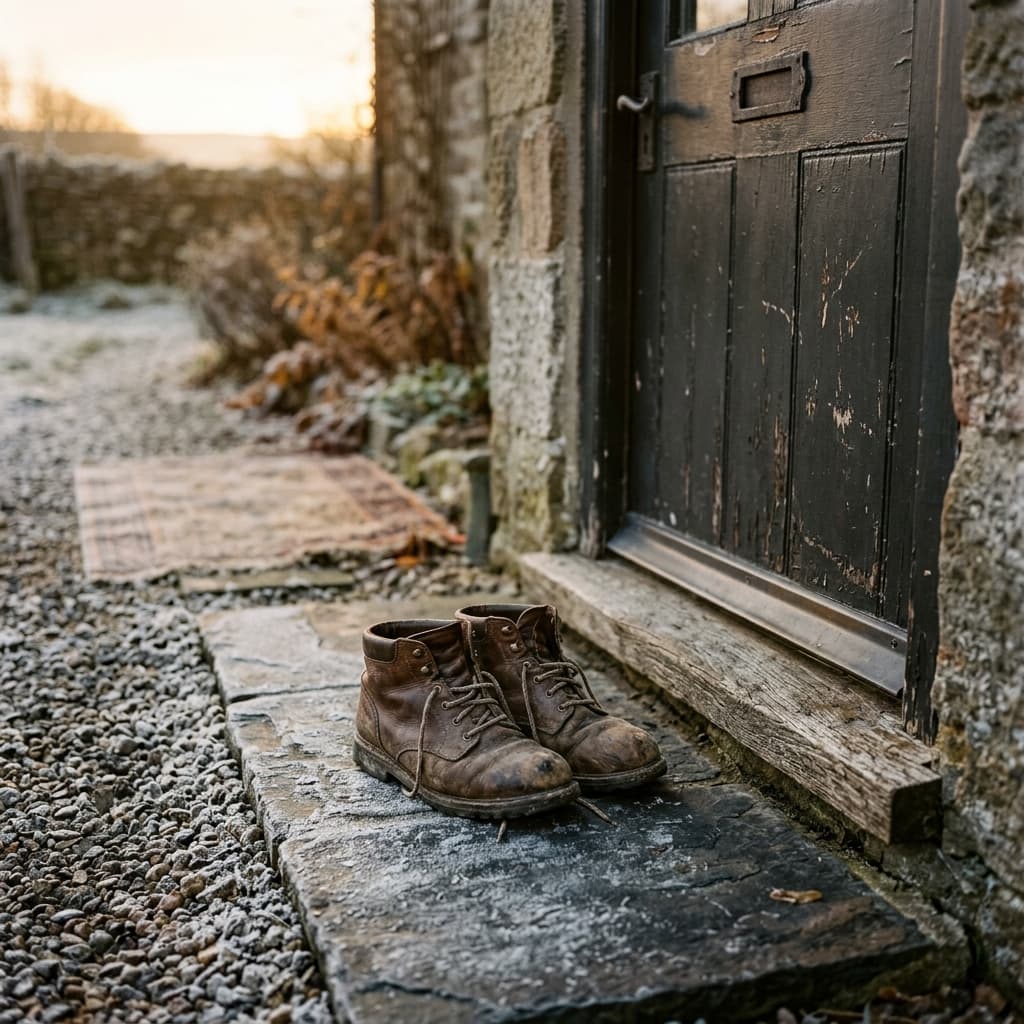
Some mornings, the first thing I feel is stiffness. Not the ordinary stiffness of having slept in one position too long, but a deeper resistance, as if my joints have been set in concrete overnight and need to be negotiated back into motion. I sit on the edge of the bed and wait. My feet touch the cold floor. I flex my fingers, hearing the small clicks that have become as familiar as my own name. Then I stand, slowly, and the day begins.
This is not the beginning I would choose. But it is the beginning I have.
By the time anyone sees me, the negotiation is over. The smile is in place. The shoes have been chosen based on how far I might need to walk today. The aisle seat has been booked so I can stretch without asking permission. The calculation happened before the first conversation of the day, before the first coffee, before the world had any reason to notice that something was being managed.
The world is designed for people whose bodies cooperate. The stairs without a railing. The standing ovation that lasts three minutes. The dinner party where the chairs are beautiful and hard and you are expected to sit in them for two hours without shifting. The assumption, baked into every invitation, every workplace, every social event, that your body will do what you tell it to.
When your body does not cooperate, you learn a second language. Arriving early so you do not have to stand in line. Declining invitations, not because you do not want to go, but because you cannot guarantee your body will hold up for the duration. Carrying ibuprofen the way other people carry their keys: automatically, without thinking, because the alternative is unthinkable.
A friend once said, casually, you look fine. She meant it as a compliment. It landed like a door closing.
Pain neuroscientist Lorimer Moseley, a professor at the University of South Australia, has spent decades studying how the brain constructs the experience of pain. His research reveals something that changed the way I understand my mornings: pain is the brain’s assessment of threat, a protective output that can persist long after the original injury has healed. In chronic pain, the nervous system has learned to overprotect, sending alarm signals that are genuine in their felt experience but disproportionate to the current physical reality.
The pain is completely real. It is also more complex than a damage report. Understanding this complexity does not make the pain disappear. But it changes the shape of the relationship. Instead of interpreting every flare as worsening damage, I can see it as a nervous system stuck in protective mode, vigilant and loud and, possibly, more adjustable than it feels.
On the mornings when the stiffness is worst, I hold this knowledge like a coin in my pocket. It does not fix anything. It gives me something to reach for while I wait for my fingers to unlock.
Living with pain is not the absence of living. It is living with a companion you did not invite, learning its rhythms so you can find your own within them.
I keep a list of what I call half-tasks. A short walk instead of a long one. One errand instead of three. Ten minutes of gentle stretching instead of an hour at the gym. These are adaptations, and there is dignity in an adaptation that lets you stay in the game rather than sitting it out entirely.
The temptation on good days is to catch up, to do everything the bad days took. The boom-and-bust cycle. You overdo it when you feel capable, and then you crash, and the crash reinforces the belief that your body cannot be trusted. I have learned to flatten the peaks and valleys into something more sustainable. Less dramatic. More consistent. A life you can actually live inside rather than one you visit on good days and mourn on bad ones.
Yesterday was a half-task day. I walked to the corner store and back. I stretched on the living room floor while the kettle boiled. I read for twenty minutes before the ache in my neck said stop. I stopped. I called it enough. It was.
If you live with pain, you already know most of what I have said here. You do not need me to explain your experience. But if it helps to hear this: the adjustments you make every day are intelligence. The careful calculations, the quiet adaptations, the decisions to rest when the world expects you to push through, these are acts of self-knowledge that most people never need to develop. If today is a hard day, do less and call it enough. If today is a good day, enjoy it without punishing yourself for it tomorrow.
