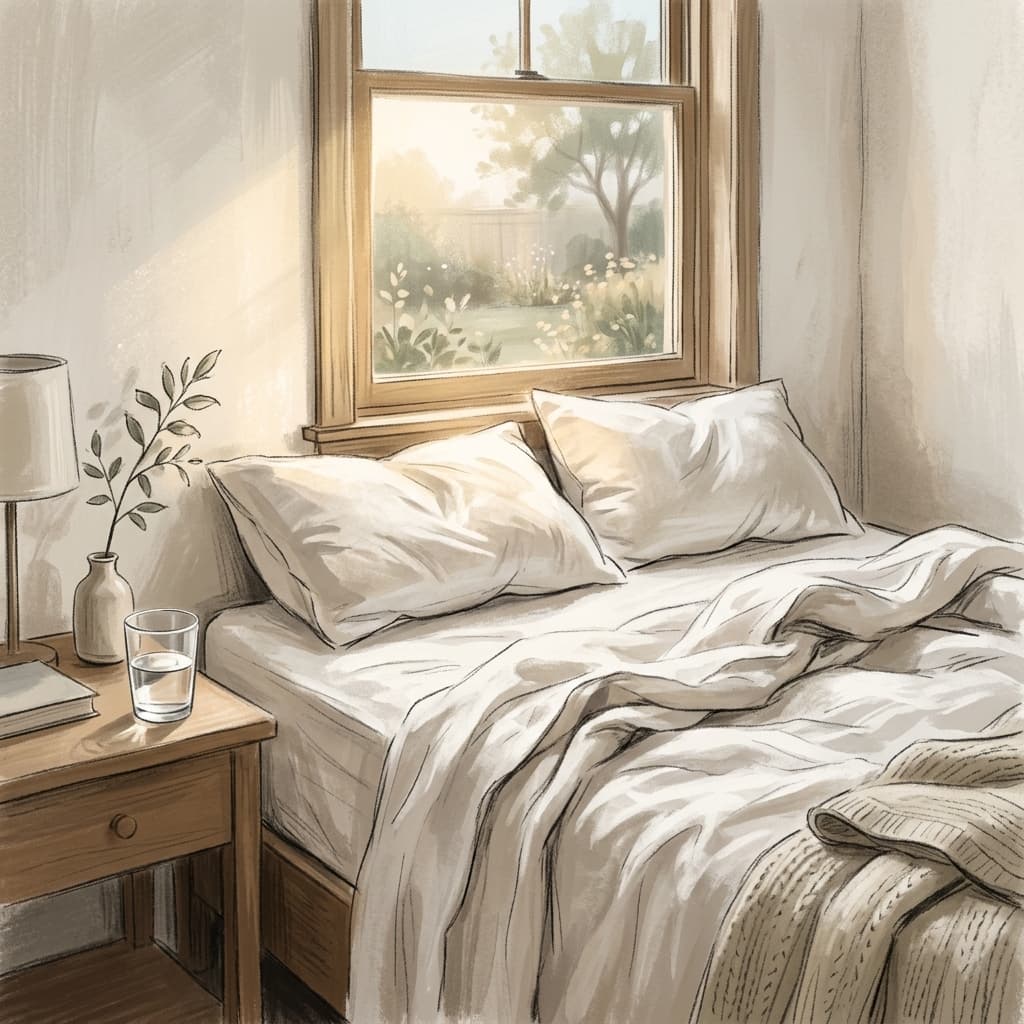
What do you become after the body breaks and mends? Not the person you were before, because that person did not know how fragile the architecture was. Not someone new, exactly, because you still carry the same memories, the same hands, the same face in the mirror. Something in between: the person who now knows what it feels like when the body stops cooperating, and who will never entirely forget.
The Kingdom of the Sick
Virginia Woolf, in her 1926 essay On Being Ill, wrote that illness is one of the great unexplored territories of human experience. We have libraries of books about love and war and grief, she argued, but almost nothing about the daily reality of lying in bed with a fever, watching the ceiling, noticing the way the light changes hour by hour when you are too weak to turn your head. Illness, Woolf insisted, deserves its own language, because the well have no idea what the sick are thinking.
She was right, and the gap she described has not closed in a century. When I was ill, genuinely, frighteningly ill for the first time in my adult life, I discovered that the language available to me was borrowed entirely from the well. People asked: are you feeling better? As though better were a destination I could drive to. They said: you will be back to normal soon. As though normal were a fixed point I had temporarily left, rather than a place that no longer existed.
The illness lasted three months. The first two weeks were the acute phase: the fever that turned my sheets damp by morning, the metallic taste at the back of my throat that made water taste like something manufactured, the deep, muscular exhaustion that made lifting a cup of tea feel like a deliberate athletic act. But the acute phase was not the hard part. The hard part was everything after.
The Long After
Recovery, as the medical system describes it, is a line graph that goes up. You get better incrementally, steadily, measurably. But my recovery did not move in a line. It moved in spirals. Tuesday I could walk to the corner store. Wednesday I could not get out of bed. Thursday I felt almost normal and made the mistake of cleaning the kitchen, and Friday my body punished me with a fatigue so heavy I could feel it in my teeth, a dull, weighted ache behind my jaw that no amount of sleep could reach.
Arthur Frank, the sociologist who wrote The Wounded Storyteller in 1995, described three kinds of illness narratives: the restitution story (I was well, I got sick, I am well again), the chaos story (I am sick and nothing makes sense), and the quest story (I was sick and it changed me). The medical system overwhelmingly prefers the restitution narrative. It wants you to go back to what you were. But most people who have been seriously ill know that the restitution story is, at best, incomplete. You do not go back. You go somewhere else.
The Body That Remembers
The body after illness is more than the body before illness minus the illness. It is a different body. It has new information. It knows what it feels like to be unable to climb a flight of stairs without stopping halfway, gripping the banister with both hands, feeling the cold metal under palms that are sweating from effort that used to be invisible. It knows the specific exhaustion of a body that has spent weeks fighting something it could not see, the bone-deep tiredness that sleep does not touch.
Six months after the illness, I was technically recovered. The blood work was normal. The doctor signed me off. But my body had not forgotten. It flinched at the first sign of a cold: a tickle in the throat, a faint ache behind the eyes, and the whole nervous system would light up with a vigilance that felt disproportionate to the threat. The body was being careful. What might have read as drama was only caution. It had learned something the hard way, and it was not going to unlearn it for the convenience of my schedule.
I noticed it most in the mornings. Before the illness, I woke and stood up in a single motion, thoughtless, automatic. After, there was a pause. A moment of assessment while I was still horizontal, the body running a quiet diagnostic: how are the joints? Is there heaviness? What does the chest feel like? This pause was intelligence, anything but anxiety. The body checking its own weather before stepping outside.
Learning to Live in the After
The most difficult thing about recovery was the grief of the gap between what I could do and what I remembered being able to do, not the physical limitation. The memory of the old body, the one that ran for buses and stayed up late and did not think about energy as a finite resource, became a ghost that lived alongside the present body, constantly reminding it of what had been lost.
But grief, if you let it, eventually becomes something else. Not acceptance, exactly. Something more like acquaintance. I came to know this new body the way you come to know a house you have moved into: cautiously at first, noticing where the floorboards creak, learning which windows let in a draft, understanding that the heating works differently here and you will need to adjust your expectations.
The body after illness is quieter. It asks for rest earlier and more firmly. It responds to cold weather and late nights with a specificity the old body never had: a tightness in the chest when the temperature drops, a heaviness behind the eyes after nine o’clock that brooks no argument. Far from weaknesses, these are the body’s new terms, and they are non-negotiable because the body has earned the right to set them.
You do not recover from illness. You recover into something: a body that knows more than it used to, that carries its history in its joints and its caution in its mornings. The knowing is not a burden. It is a kind of depth.
If you are on the other side of something your body went through, if the doctors have signed you off but the body has not yet agreed, you are not imagining the gap. The gap is real. Recovery takes longer than medicine measures, because medicine measures the absence of disease and the body measures something else entirely: the slow, patient work of learning to trust itself again. Give it time. Give it more time than seems reasonable. Where it might seem difficult, the body is only being thorough.
