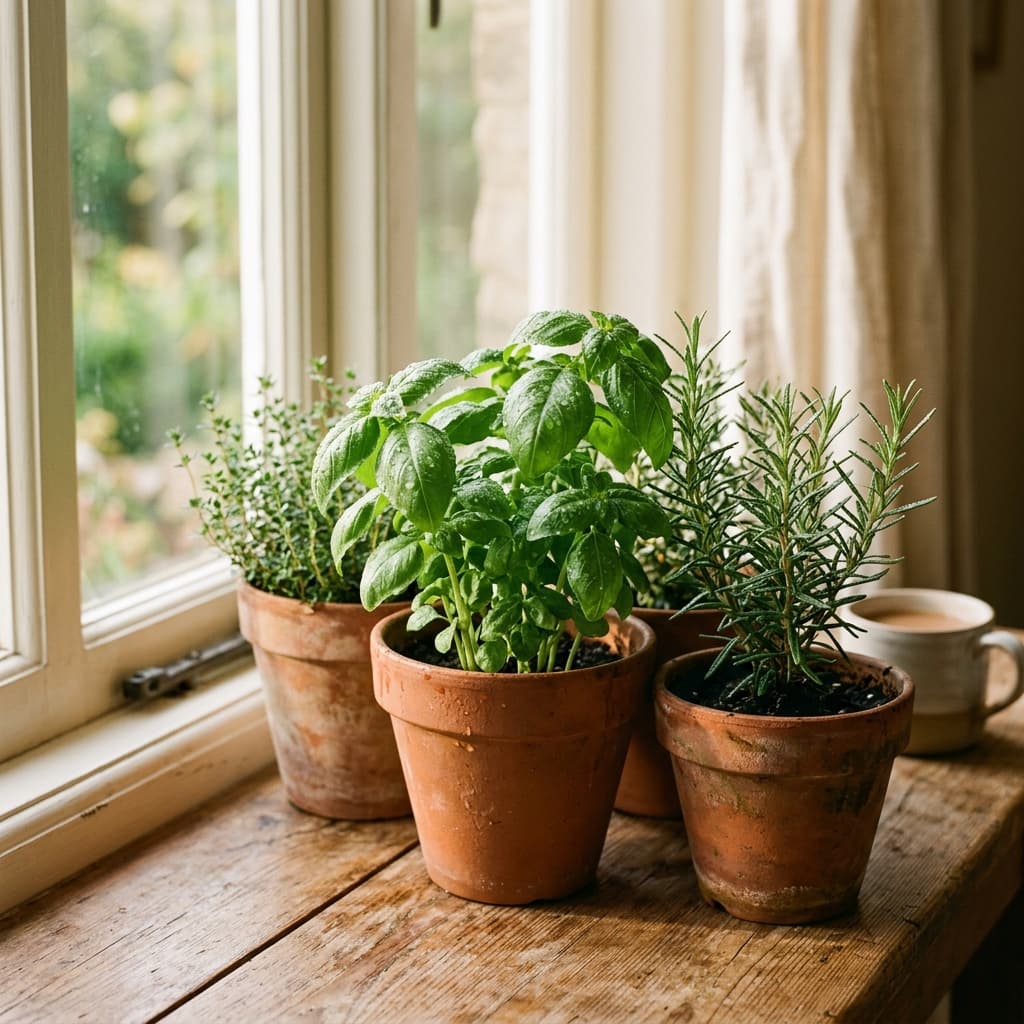
I started gardening out of boredom during a stretch of days when my body needed rest but my mind needed occupation. I bought a small pot of basil from the supermarket, set it on the windowsill, and promptly overwatered it. Within a week, the leaves were yellow and drooping. I had loved it too hard, too fast, without understanding what it actually needed.
But my strongest memory of that first failure is a tactile one: the feeling of the wet soil when I pressed my finger into the pot to check what had gone wrong, not the sight of the yellow leaves at all. The soil was cold and dense and clung to the pad of my index finger, and the sensation surprised me: I had been caring for this plant for a week without once touching the earth it lived in. I had watered from above, tended from a distance, managed the basil the way I manage most things, with intention and attention but without actual contact. The soil under my fingernail was the first honest information I received.
Patience as a Practice
A garden operates on a different clock. Seeds do not sprout because you want them to. They sprout because the conditions are right: moisture, warmth, darkness, time. You can prepare the soil, plant the seed, water it faithfully, and then you must wait. There is no shortcut. No hack. No way to will a seedling into being. The garden teaches, in the most literal way possible, that some things cannot be rushed.
Sue Stuart-Smith, a psychiatrist and psychotherapist who spent decades studying the relationship between gardening and mental health, describes gardening as a practice that engages the body before the mind has time to construct its usual narratives. In her clinical work, she observed that patients who gardened showed measurable reductions in cortisol, not because gardening is relaxing in the way that sitting on a beach is relaxing, but because it recruits the hands into a task that is sensory, repetitive, and responsive. The hands are in the soil. The soil is alive. The feedback loop between skin and earth operates below the level of conscious thought.
This was difficult for me. I am someone who checks. I open the oven door too often. I refresh the page before it has loaded. I pull up the seedling to see if roots have formed. The garden punished every one of these impulses. Check too often and you disturb the process. Intervene too much and you weaken the very thing you are trying to help. The hardest lesson the garden offered was this: sometimes the most useful thing you can do is nothing at all.
Tending Without Controlling
There is a difference between tending and controlling. Tending is attentive. It notices what is needed and responds accordingly. Controlling is anxious. It imposes a plan regardless of what is actually happening. In the garden, controlling looks like watering on a rigid schedule even when the soil is already damp, or pruning for aesthetics when the plant is trying to grow in the direction of the light.
I learned the difference through my hands. Tending feels like this: kneeling on the path with the gravel pressing into my kneecaps, pushing my fingers into the soil to check its moisture, feeling the cool, granular weight of it against my skin. The smell of turned earth, faintly mineral, faintly sweet, rising from the disturbance. The particular resistance of a weed root when you pull it slowly, the way it holds and then gives, and the small, satisfying rupture when it releases from the soil. Tending is a conversation between the hands and the ground. Controlling is a monologue.
I have noticed this pattern in how I treat my own life. The desire to manage, to direct, to optimize every outcome. But some of the best things that have happened to me arrived sideways, from directions I never would have planned. The relationships that sustain me, the work that fulfills me, the quiet pleasures that make a day worth living: none of these were items on a list. They grew, the way gardens grow, from conditions I tended without fully understanding what would emerge.
The garden does not reward perfection. It rewards attention. And there is a world of difference between the two.
What Dies, What Returns
The first time a plant of mine died, I took it personally. I had failed. I had not been attentive enough, or too attentive, or I had chosen the wrong pot, the wrong soil, the wrong spot. But a garden is a living system, and living systems include death. Not as a failure, but as part of the cycle. Leaves fall. Stems wither. Roots rot. And in the space they leave behind, something else eventually grows.
I have started composting the things that do not survive. Turning dead leaves back into soil. There is something deeply comforting about the physical act of it: the damp, dark weight of decomposing matter in my hands, the warmth at the center of the compost heap where the microbial work is happening, the slow transformation of what ended into what might begin. My fingers close on the crumbling warmth and something in me settles before a single thought about renewal arrives. Death in the garden is not a full stop. It is a semicolon.
You do not need a garden to practice what the garden teaches. You just need one living thing to tend. A single plant on a windowsill. A pot of herbs by the kitchen sink. Something that asks you to pay attention, to respond to what is actually needed rather than what you think should be needed, and to wait without knowing exactly what will grow. If you are willing, try this: the next time you water a plant, push your finger into the soil first. Feel whether it is dry or damp, cool or warm. Let the soil tell you what it needs instead of following a schedule. That small act of listening, with the hands instead of the mind, is the whole lesson. If you do not have a plant, you might start there. Not as a project. As a practice.
