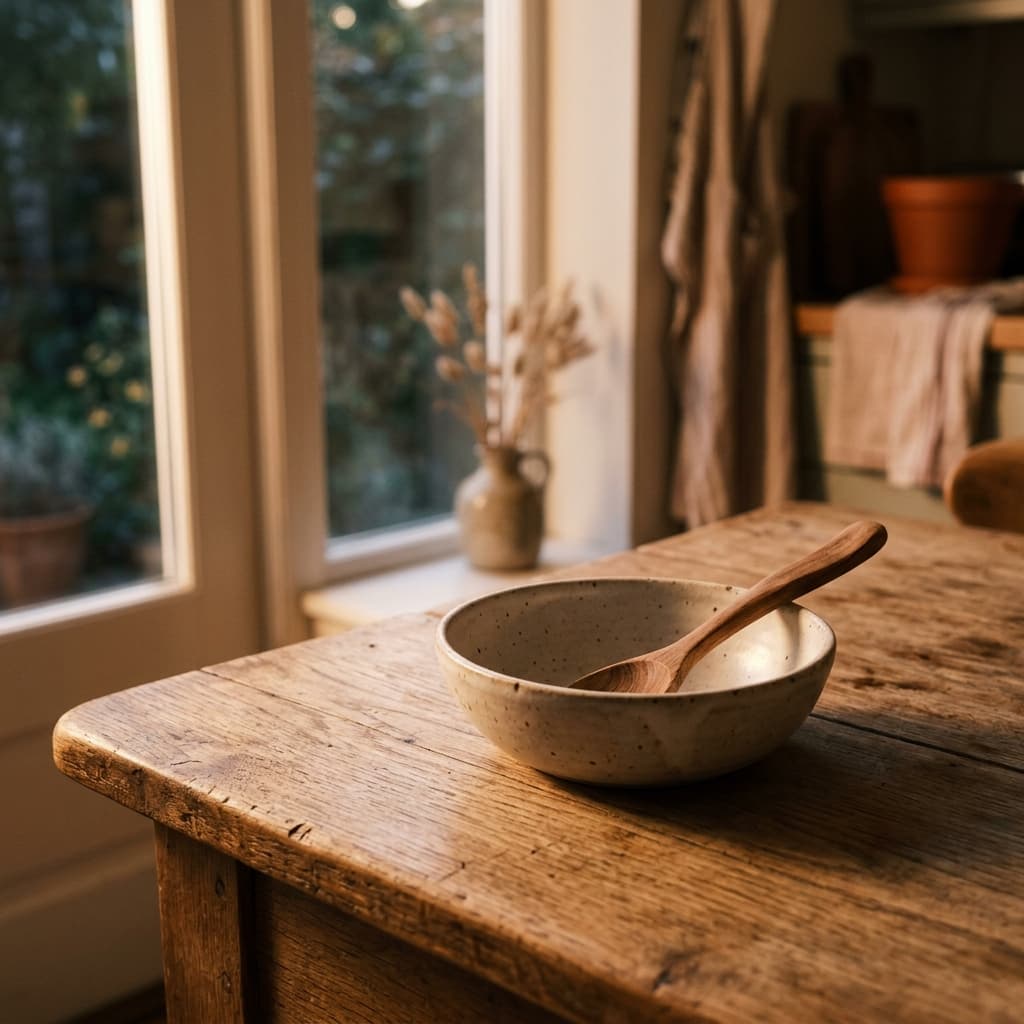
It was eleven at night, and I was standing in front of the open refrigerator, looking for something I could not name. I was not hungry. I had eaten dinner two hours earlier, a good one, enough to feel satisfied. But a pull below my ribs was reaching, searching, scanning the shelves for an answer to a question that had nothing to do with food.
I closed the door without taking anything. I sat down at the kitchen table instead, and I asked myself, honestly: what are you actually hungry for? The answer, when it came, surprised me. I was lonely. Not in a dramatic, cinematic way. Just the quiet, low-grade loneliness of a day spent entirely in functional mode: tasks completed, emails sent, conversations had, but none of them nourishing. I had been fed, in every measurable way, and I was still starving.
The Hungers We Misread
We are taught to read hunger as a physical signal, and it is. But the body is not as precise with its messages as we would like. Jan Chozen Bays, a pediatrician and meditation teacher, identifies at least seven distinct types of hunger: eye hunger, nose hunger, mouth hunger, stomach hunger, cellular hunger, mind hunger, and heart hunger. Each sends a different signal, and most of us have learned to collapse them all into one category. The stomach tightens for multiple reasons. The restless reaching that drives you to the kitchen at eleven at night may be your body asking for water, or sleep, or connection, or simply to be held.
This is not about willpower or discipline. It is about translation. The body sends a signal, and we interpret it through the lens of whatever is most available. Food is almost always available. Touch, rest, connection, solitude, creative expression: these are harder to access on demand. So the hunger gets redirected toward the nearest open door, which is usually the refrigerator.
The Menu You Do Not See
I have started keeping a private list. Not a meal plan or a food diary, but a list of the things that actually nourish me, the things that leave me feeling genuinely full afterward. It includes obvious entries like sleep and time outdoors. But it also includes things I would never have thought to categorize as nourishment: a long phone call with someone who knows me well. An hour spent drawing badly. Sitting in a room with natural light and no obligations. Reading something that makes me feel understood.
The list is imperfect and always changing. But having it at all has shifted something. When the reaching starts, when I feel that vague, unnamed appetite, I can scan the list before I scan the kitchen. Often, what I need was never on any shelf to begin with—it lives in my phone contacts, or in the sketchbook in the drawer, or in the simple act of stepping outside and standing in the air for three minutes.
The most nourishing things in your life are rarely the ones you can find in a kitchen. They are the ones you have to stop long enough to notice you are missing.
Feeding What Is Actually Hungry
I want to be clear about what this is not. This is not about restricting food or ignoring physical hunger. If you are hungry, eat. The body’s need for fuel is real and important and should be honored without negotiation. What I am describing is the layer beneath that: the hungers that remain even after the plate is clean. The ones that no amount of snacking can satisfy because they were never about food in the first place.
Learning to feed those deeper hungers is not a skill anyone teaches you. It requires the same kind of attentiveness that gardening requires, or parenting, or any relationship where the other person cannot always tell you what they need in words. You have to learn the signals. You have to try different things and see what lands. You have to be willing to get it wrong, to offer yourself rest when you needed play, or solitude when you needed company, and to try again without judgment.
Tonight, if the reaching starts, try pausing before you open the door. Sit down. Put your hand on your stomach and ask, gently: what are you really hungry for right now? You may not get an answer. That is fine. The question itself is the practice. Over time, the answers become clearer, and you begin to build a different kind of pantry, one stocked not with food but with the things that actually fill you up.
